The Chicago Trilogy
by Frank S. Joseph
Chicago, 1948 to 1966, written by a reporter who was on the street while it burned.
To do justice.
To love mercy.
To walk humbly.
Micah 6:8
Three commands from the prophet Micah. Frank S. Joseph gave each one a novel, and gave all of them to Chicago.
It starts with a locked car door
Before it was a trilogy it was a boy in the back seat of his father’s car, riding through Bronzeville on the way to White Sox games. Every trip carried the same instruction from the front seat: lock the doors. Frank S. Joseph grew up White and comfortable in Hyde Park, a few miles from the neighborhood on the other side of the glass and a world away from it.
The Chicago Trilogy is what became of that memory: one story, told across nearly twenty years of a city’s life, about what the locked door was protecting and what it cost.
1948
Book I · Steve’s Book
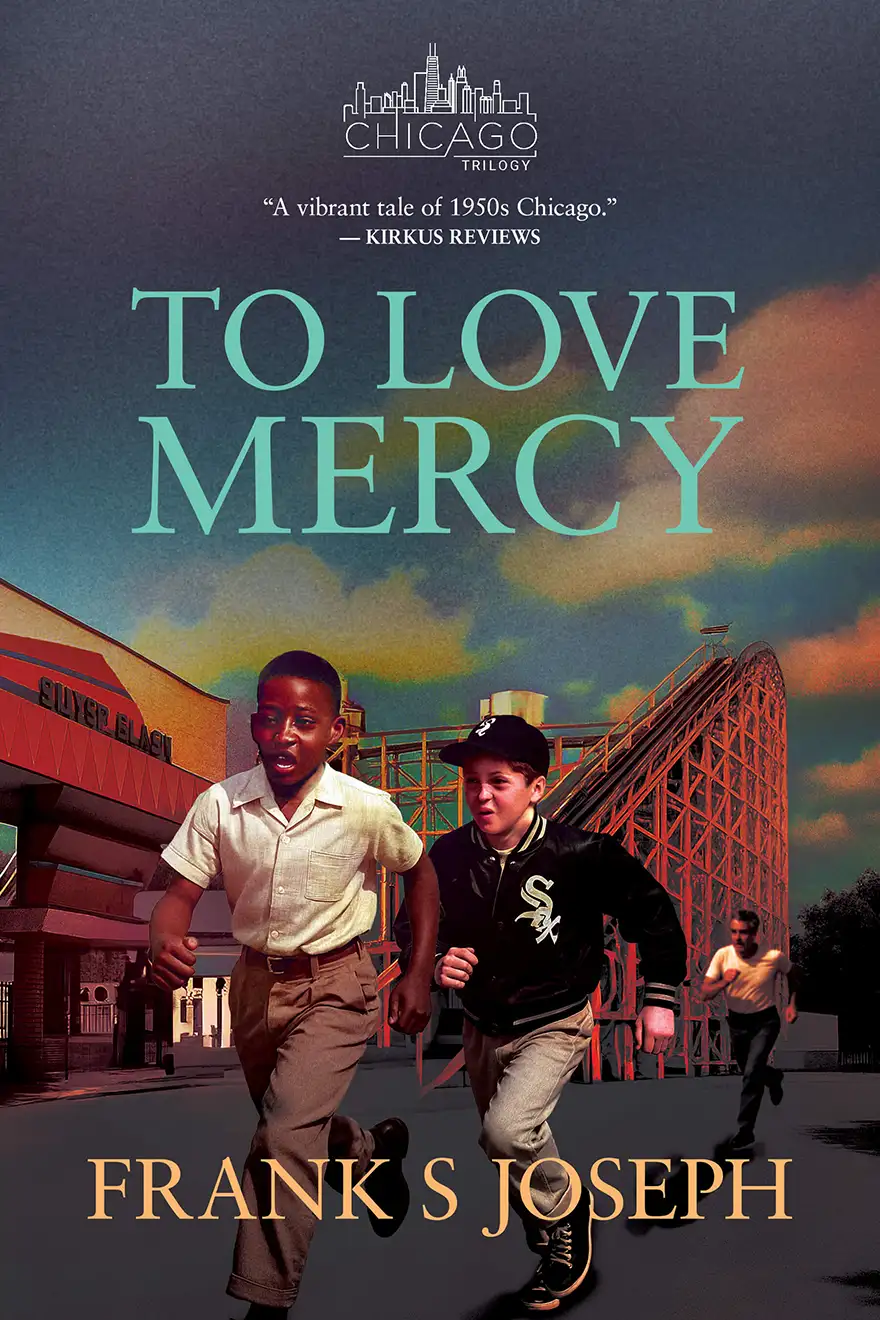
To Love Mercy
June 15, 1948. Midnight in a deserted parking lot on the South Side, after a Sox game. Steve Feinberg, ten years old and White, is heading home with his father and grandfather when a crowd of Black kids comes out of the darkness begging for dimes. Things spin out of control. Grandpa Nate slips and falls on one of the kids, breaking his nose, and the family has no choice but to carry the unconscious boy to an emergency room.
The boy is called Sass, for his smart mouth, and he wants nothing to do with Steve. Then Nate’s silver talisman goes missing, Sass takes the blame, and the only way to keep him out of jail is to find it. The search runs all night, across a hostile city, through the Maxwell Street flea market and the Riverview amusement park. It ends at dawn on the lakefront, two boys watching the sun come up and taking stock of a friendship neither one was supposed to have.
Winner of 8 awards including the Eric Hoffer Award.
Meanwhile, in the real Chicago
One month before that fictional midnight, in May 1948, the Supreme Court decided Shelley v. Kraemer and stripped the legal force from the restrictive covenants that had penned Chicago’s Black families into overcrowded Bronzeville. The families started moving. The nearest neighborhood with good schools and safe streets was Hyde Park, and its White families started leaving. Frank’s held out until his grammar-school graduation, then fled to the suburbs with the rest. He was fourteen.
“I felt like I’d been kidnapped.”
Frank S. Joseph, “White flight”
1952
Book II · Sass’s Book
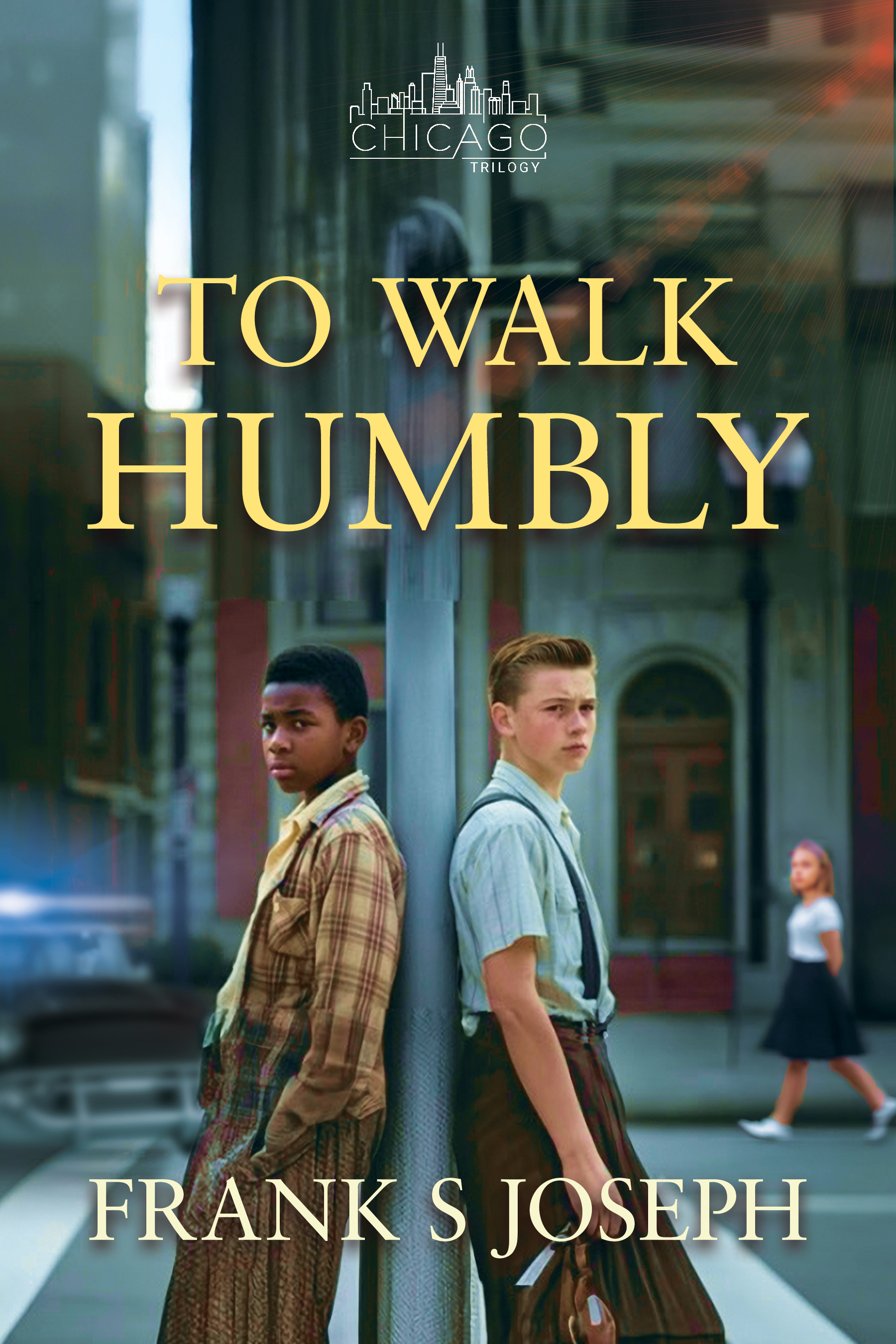
To Walk Humbly
Four years after that night on the lakefront, Steve is fourteen and walking the dog when four Black youths beat him to the pavement. In the kitchen, his parents argue about Hyde Park High School and whether it is time to run.
“Where are these people’s principles? They live here all their lives then scoot to the suburbs on account of a few colored. What kind of Jews are they anyway?”
“The kind who want to get their kids through high school without landing in the hospital.”
Steve’s mother and father, To Walk Humbly
Sass’s family is on the move too, out of Bronzeville and into Hyde Park, in the vanguard of the very influx the Feinbergs fear. The boys collide again at Hyde Park High and try to rebuild a friendship that Blacks and Whites alike disapprove of. Then Sass’s twelve-year-old cousin Bobo spends a summer in Mississippi and comes home the way Emmett Till came home, in an open casket that draws thousands. Passing it, Steve and Sass make a gesture that carries everything the two of them have learned.
“A vibrant tale of 1950s Chicago.” – Kirkus Reviews
The wire years
Frank grew up and got a press card. By the mid ’60s he was a reporter in the Chicago bureau of The Associated Press, covering the eruptions that tore through the inner city summer after summer. In ’66 he covered Dr. King’s open-housing campaign, including the day Marquette Park turned on the marchers. The AP sent him to Detroit for the ’67 riot, and in ’68 he was on the street for the Democratic National Convention disorders.
“I got gassed during that ’68 DNC. I got shot at in Detroit. My car windows were broken, more than once.”
Frank S. Joseph, “What it’s like inside a riot”
The last novel of the trilogy is not remembered Chicago. It is reported Chicago.
1965
Book III · Pinkie’s Book
To Do Justice
Pinkie arrived while Frank was snowbound in a North Side hotel room, stranded in his home town for four days by a freak storm. He says she came down from Somewhere Above and started talking. He wrote it down.
“Ever since I’m little I be wondering who my momma is. … One day I be finding her though. See does Jolene laugh when that day comes.”
Pinkie, To Do Justice
She is eleven, raised Black on the city’s meanest streets, light enough that to many eyes she could be White. The foster mother who cashes her welfare check laughs whenever she asks about her real mother, so Pinkie goes looking herself. The search entangles her with Mollie, a young AP reporter swimming against the sexism of a ’60s newsroom, modeled on a woman Frank worked beside at the wire. Around them, Dr. King’s fair-housing marches fill the streets and the West Side goes up in flames. What the two heroines uncover is bigger than one girl’s parentage, and it leads to a Pulitzer-worthy scoop.
“A gripping, richly textured saga of the civil rights era. Our verdict: Get it.” – Kirkus Reviews · An IndieReader Best Book
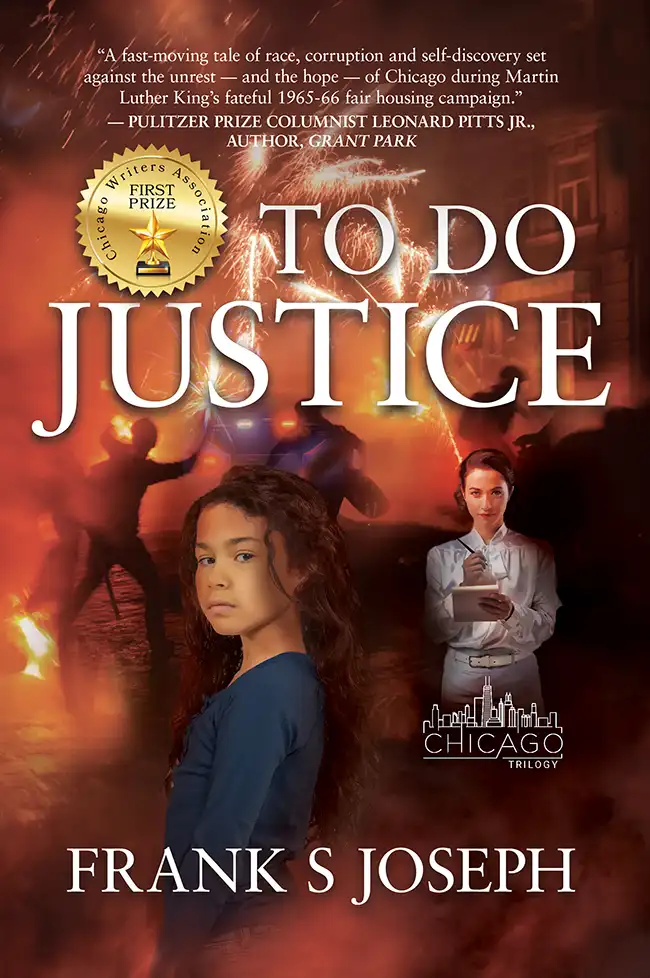
2025 Readers’ Favorite Gold Medal Winner in the Fiction in the Cultural genre!
Why justice comes last
Micah put justice first. The trilogy makes Chicago earn it. Mercy is something two boys can manage in a single night; humility is learned at a funeral. Justice takes the whole city, and it comes last for a reason.
“An unforgettable portrait of a city burning with hatred and hope.”
Kirkus Reviews
Frank spent the years after the riots trying to explain what he had seen, first in a doctoral program he walked away from, then in a career far from Chicago. The story waited. “But my own story of those long-ago events … I still hadn’t told it,” he wrote when the final novel was published. “Now I have.”
He left readers one admission about the oafish reporter who wanders through the third book: “And Steve, the oaf? Well, Steve is me.”