EssaysFrom the Friend of Frank archive
Jesse Jackson, PSP and Me
I met Jesse Jackson in Chicago and never forgot the charisma. It turns out we share a diagnosis too.
CHICAGOCHICAGO CIVIL RIGHTSHEALTH & AGING
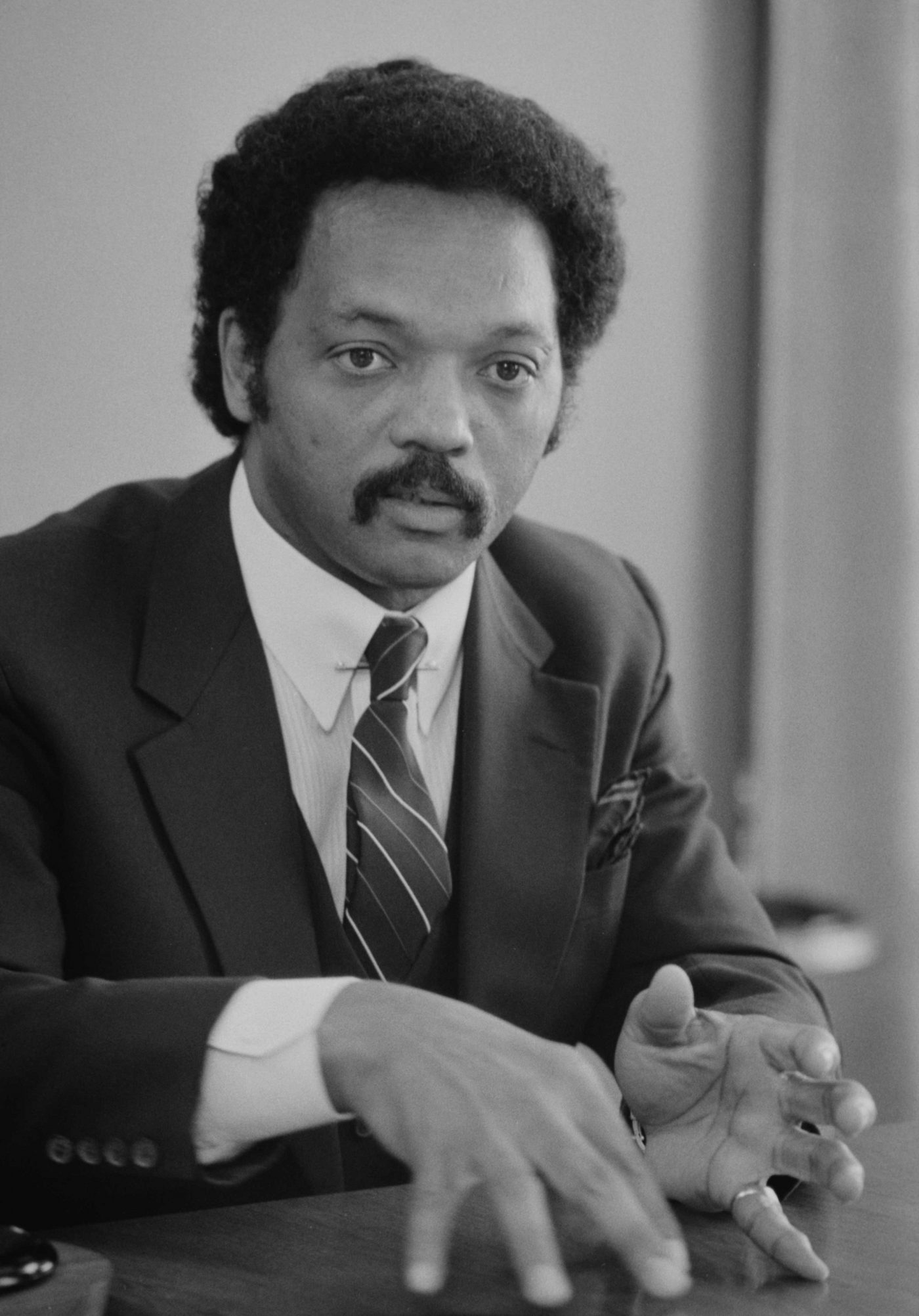
Civil rights leader and two-time presidential candidate Rev. Jesse Louis Jackson has died. Jackson was a controversial but undeniably important man of our time, and one possessed of immense personal charisma. I speak from experience.
Jackson died following a struggle with Progressive Supranuclear Palsy (PSP) that lasted more than a decade. I have personal experience of PSP too.
First though, about that charisma.
When I was in my mid 20s and a reporter in the Chicago bureau of The Associated Press,
I was assigned to write a profile of Jackson for Sunday morning newspapers. It was a plum.
Jesse Jackson in 1963. (c) Wikimedia
I interviewed Jackson in his apartment near the University of Chicago for maybe an hour and a half and returned to the bureau with stars in my eyes.
When I sat down to type. I asked my editor how many words. As many as it takes, he said.
I wrote some 2,500 words.
They cut it to 800 and ran it for Thursday afternoon papers. That hurt at the time but, looking back, I deserved it. I'd lost my objectivity, a cardinal sin at The AP.
The death that Jackson died took more than a decade to bring him down, a decade during which he grew a bit worse every day, a bit less able to use the arms, legs, body and brain he was born with.
At the end, he wouldn't have been able to swallow and his loved ones would have had to decide whether to prolong life with a feeding tube. I know this because my mom, Marjorie-Lee Baum Joseph Perrine, died of PSP too.
PSP is classed as a movement disorder. So is Parkinson's Disease except Parkinson's is treatable. There's no treatment -- yet -- for PSP, though there is a drug in clinical trials.
My mom Marjorie-Lee Baum in her 20s
PSP gets its mouthful of a name from the characteristic upward roll of the eyes. That's why PSP victims tend to fall backward.
PSP is rare, thank goodness, and not inheritable (except for a family in South America, where PSP or something like it is rampant). But PSP probably is more common than was thought at the time.
My mom's neurologist was a year concluding that she had PSP, a year when he treated her with the Parkinson's med called L-DOPA. L-DOPA just made her sicker. I still feel guilty not getting her off it when I could see it was hurting her.
The neurologist said PSP doesn't affect the mind. I couldn't tell because she was becoming aphasic, unable to speak. But after she died I sent her brain to Johns Hopkins, one of the few centers then studying the condition, where they discovered she also had Lewy body dementia. I've since learned the two conditions often are found together. I don't know whether her neurologist knew that at the time.
It took Jesse Jackson more than a decade to die. It took my mom five years from diagnosis, but I'm sure she was sick several years earlier.
Buy when it became apparent she was very sick, she moved into assisted living. She really enjoyed the first year there. She was the star of Tuesday night Trivial Pursuit. But she got too sick to stay and the next stop -- the last stop -- was nursing home.
She was so compromised now that there were almost no pleasures left for her. But I thought of two. I'd visit bearing the biggest, gooiest chocolate I could find and feed it to her by hand, nibble after nibble. Then I'd open a book and read aloud. She loved to eat, she loved to read. I don't know whether she knew what I was reading but she seemed to enjoy the experience.
I dreaded visiting. I had to drag myself there. But the nurses showered me with praise. You're the only man visitor we see, they said. And after every visit, I felt wonderful.
The time came that my mom had to go on a feeding tube -- or die. Let her die, the nurses said. There's no quality left to her life; prolonging it a few days or weeks will just make it worse. I knew they were right, but what a hard decision.
My mom died in 1996 at age 78. I still think of her and every time the thought starts the same way: "My poor mom." I can't help but think the loved ones Jesse Jackson leaves behind must have that though as well.
Frank S Joseph Author
P.S. Podcasts! I've decided podcasts are the best way to promote my novels. I don't need to leave my desk; they're fun to do; and with luck, I just may inspire the occasional listener to buy my books. Going forward, Dear Reader, I'll give you a link to some of the better ones. Here's one to start with: